
A slow crank in Tampa is often the battery. It is also sometimes the alternator, a corroded terminal, or a starter that sounds like a battery. We test instead of guessing.
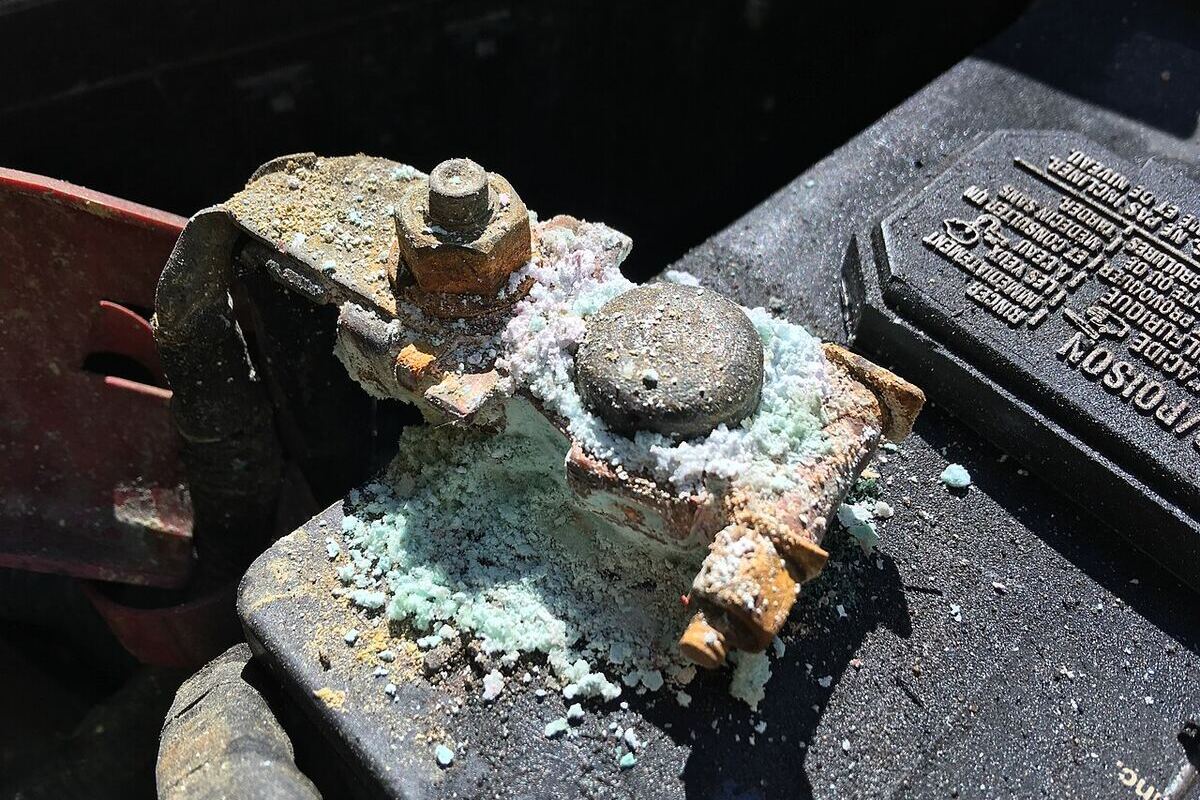
What we measure
- Load test — can the battery actually deliver cranking current, not just sit at 12.6 volts with the engine off.
- Charging voltage — a healthy charging system is typically about 13.8–14.7 volts at the battery with the engine running. Outside that range, a new battery will not save you.
- Cables and grounds — white crust on the posts, a loose clamp, or a chewed ground is a five-minute fix, not a $300 part.
The long version is in test vs replace. Heat, short trips, and sitting are why Tampa batteries die young — Florida heat and battery life. If you are choosing between a jump and a new battery, read jump vs replace.
When testing is the whole visit
If the battery holds and charging is in range, you get that answer for $75 and you keep the battery you have. If it fails, we quote a replacement before we disconnect anything.
Common questions
- If the battery passes, do I still pay?
- A test-only visit is $75 when the battery passes and you keep driving. If we replace the battery on the same visit, you are paying for the install, not stacking a separate diagnostic fee.
- Can a load test be wrong in this heat?
- Heat hides a weak battery until morning. We still test. If the battery is borderline, we tell you that.
- Should I get a jump or a replacement?
- A jump is $75 if the battery will take a charge and hold. If it fails the load test, a jump is a delay — we quote a replacement before we pull the old unit. See the no-start page for that fork.